
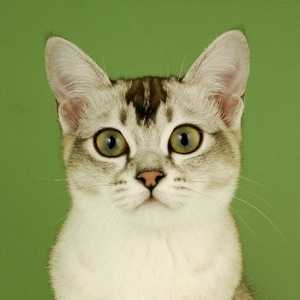
- Designazione:
- ASI
- Gruppo:
- Shorthair
- Categoria:
- Principale
- Origine :
- United Kingdom
- Si raccomanda:
- families with children; for people who are rarely away from home for long periods; for apartment living.
The origin of the breed
A relatively young breed: its origins date back to the 1980s. The first litter of the Asian breed was born in 1981 in the United Kingdom, as a result of an accidental cross between a Persian cat (Chinchilla color) and a lilac Burmese cat. The resulting kittens were shorthaired, of Burmese type, with a black shaded coat.
Breeders were greatly inspired by the striking appearance and remarkable character of the breed, and they began selectively breeding Asian cats. This led to the creation of an entire group of breeds, united in England under the common name "Asian Cat":
- Burmilla (Asian Shaded) / Burmilla
- Asian Smoke / Asian Smoke
- Asian Tabby (ticked, spotted, striped, and marbled) / Asian Tabby
- Asian Self and Tortoiseshell (in England, the Bombay cat is included in this subgroup, while in many European and American systems, Bombay is a separate breed)
- Tiffanie (Asian Semi-longhair) / Tiffanie
The Asian Shorthair received recognition in the 1990s from GCCF (United Kingdom). These cats attract attention with their huge variety of colors, excellent appearance, and docile, affectionate nature. Unlike in Russia, where they are practically unknown, these cats are very popular throughout the rest of the world.
Appearance
A medium-sized cat, weight 3–8 kg, sometimes more. Possesses a strong bone structure and well-developed musculature. A luxurious animal, proportional, with a rounded chest, beautiful topline, and firm abdomen. Sexual dimorphism is relatively pronounced: females are slightly smaller than males.
Standard — Point Scale (TOPCAT):
| Parameter | Points |
|---|---|
| Head (shape, top of head, muzzle & chin, profile) | 20 |
| Eyes | 10 |
| Ears | 5 |
| Body (size & boning, torso, neck, legs & paws) | 20 |
| Tail | 5 |
| Coat (length, texture, color) | 35 |
| Condition | 5 |
| Total | 100 |
Head (20 points):
- Shape (10 points): Short and broad wedge with prominent rounded cheek bones. Top of the head broad and with height, wide between the ears and slightly rounded. Rounded forehead.
- Muzzle and chin (5 points): Broad and quite short muzzle with soft rounded contours. Chin and lower jaw are firm.
- Profile (5 points): Broad nose of even width. A straight nose is preferred, but a slightly downward nose leather is acceptable. The profile is clearly curved.
Eyes (10 points): Large and set wide apart. The upper line of the eyes is set at a slight oriental slant, while the lower line is rounded. Color varies from yellow to amber; golden yellow is preferred. No flecks or spots.
Ears (5 points): Rather large in proportion to the head, set wide apart and slightly tilted forward. Broad at the base with slightly rounded tips. The outer lines of the ears continue the upper contours of the wedge.
Neck (5 points): Medium length, strong.
Body (20 points):
- Size and boning (5 points): Medium sized and of medium length. Very muscular and more solid and heavier than it appears.
- Torso (5 points): The chest is solid and rounded when viewed in profile. The back is straight from the shoulders to the rump.
- Legs and paws (5 points): Rather slender and in proportion to the body. The paws are dainty and oval.
Tail (5 points): Straight and of medium length, with a slightly rounded tip.
Coat (35 points):
- Length (10 points): Very short.
- Texture (10 points): Sleek and silky to the touch, fine and glossy. Lies close to the body and has almost no undercoat.
- Color (15 points):
- Self: The coats of kittens and adolescent cats need time to develop full pigmentation.
- Smoke: When in repose the cat should have the overall appearance of a Self cat, the silver undercoat showing through when the cat moves, giving the "smoke" effect. Some faint ghost tabby markings may be evident on the body, especially in kittens, but distinct tabby markings in adults are undesirable.
- Tabby: The markings should show good contrast with the ground color. In dilute colors, the contrast between the markings and the ground color is less than that required in non-dilute colors or full expression colors. In Tortie Tabbies, the distribution of Tortie markings is immaterial.
Condition (5 points): Excellent physical condition, glossy coat, clean eyes and ears.
Colors
Can be almost any: black, chocolate, lilac, cream, blue, silver, golden, shaded, smoke, tabby (all variants), and tortoiseshell. Self colors must be clean, without residual pattern.
Note: Reds and Creams may show "freckles" (lentigo) on the nose, paw pads, lips, eye rims, and ears — this is not considered a fault.
Special Breed Faults
- Round eyes
- Prominent nose bump
- Pronounced whisker break
- Narrow cheek bones
- Flat forehead
- Pale eye color
Without Certificates
- Green eyes
- Cobby or oriental body type
- Too long or shaggy coat
Disqualification
- White spots anywhere
- Amputated claws
- Cryptorchidism
- Deafness
- Any bone deformities of the head, body, or limbs
Personality and Character
A peaceful, affectionate, docile, friendly, and gentle cat. Adapts perfectly to apartment living, does not require outdoor access. Very devoted to its family, loving all family members equally. Gets along excellently with children.
Intelligent, understanding, playful, active, curious, and very good at expressing its feelings. Has a non-confrontational personality but can defend itself and its offspring if necessary. Dislikes being left alone for long periods, although short-term absence of its owners does not cause serious discomfort.
Care and Maintenance
Easy care: a rubber grooming mitt or chamois cloth is sufficient to add shine. Brush Asian cats no more than once a week, bathe about once a month (or before a show). Once a week, check the ears for dirt, parasites, or excess wax. Eye discharge should be removed daily with a damp cotton pad or tissue. A scratching post is essential in the home.
Nutrition
A balanced diet — super-premium food or high-quality natural feeding (meat, organ meats, vegetables, vitamins). Asian cats are prone to overeating, so portion sizes should be controlled.
Health
Overall, the breed is robust and healthy due to the use of Burmese and Persian lines. However, there may be a predisposition to gingivitis and polycystic kidney disease (PKD) — regular veterinary check-ups and testing of breeding cats are recommended. Life expectancy: 12–16 years.
Breeding
Permissible outcrosses (in the TOPCAT system):
- Tiffany
- Burmese
- Burmilla
Breeds Created Using Asian Cats
- Burmilla
- Tiffanie
Other and Obsolete Breed Names
Asian Shorthair.
Unofficial (Slang) Names
Asian.